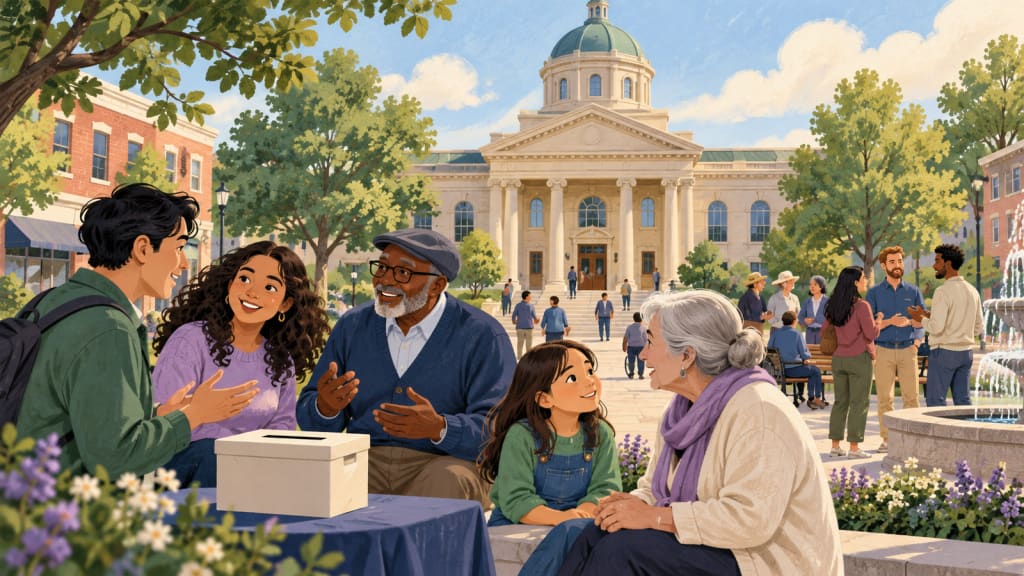
Civics: How Government Works is a free course that explains, in clear and balanced language, how governments are organised and how citizens take part. This civics for middle school course covers why governments exist, the main types of government, constitutions and the rule of law, the branches of government, elections, rights and responsibilities, local government, and how young people can make a difference in their communities.
Understanding government helps students make sense of the news, ask good questions and participate responsibly as they grow up. The course uses examples from several countries, including the United States, the United Kingdom, India and Canada, so learners see that there is more than one way to organise a democracy. It focuses on how systems work rather than on which political party or leader is right.
What you will learn
- Explain why societies create governments and laws
- Compare democracy, monarchy and authoritarian systems
- Describe what a constitution does and what the rule of law means
- Explain the legislative, executive and judicial branches and the idea of checks and balances
- Describe how elections work and how to evaluate political information
- Identify rights and responsibilities, and plan a community project
Who this course is for
This course is for students in Grades 7 and 8 (about ages 12 to 14). It also works as a refresher for older students and adults who want a clear overview of how government works.
A note for parents and teachers
This course is deliberately non-partisan. It does not argue for any party, candidate or policy. Systems differ between countries and sometimes between regions within a country, so students are encouraged to research how their own national and local government works, using official government websites and reliable sources. Discussions about politics can become heated; the final lesson models respectful disagreement, which is one of the most valuable civic skills of all.
How the course works
There are eight lessons of about fifteen minutes each, each with key takeaways and a practice task with answers. The final lesson guides students through a small civic action project.